
Criminal Cases in Warren County Courts
Warren County Superior Court is the felony trial court. It belongs to the six-county Toombs Judicial Circuit, and its elected clerk preserves criminal dockets, filings, calendars, notices, judgments, fines, and costs. Magistrate Court handles criminal warrants, search warrants, pre-warrants, first appearances, bond hearings, preliminary hearings, and extradition matters. The combined Probate and Magistrate office also lists traffic and county ordinance work. A city ordinance or fine-only traffic file may remain with its municipal court rather than appear in Warren Superior.
The official Warren County Clerk page identifies the clerk as the keeper of permanent court records. The image below shows that source. It matters because the clerk, not the arresting officer or prosecutor, is the place to confirm what was filed and how the judge resolved it.
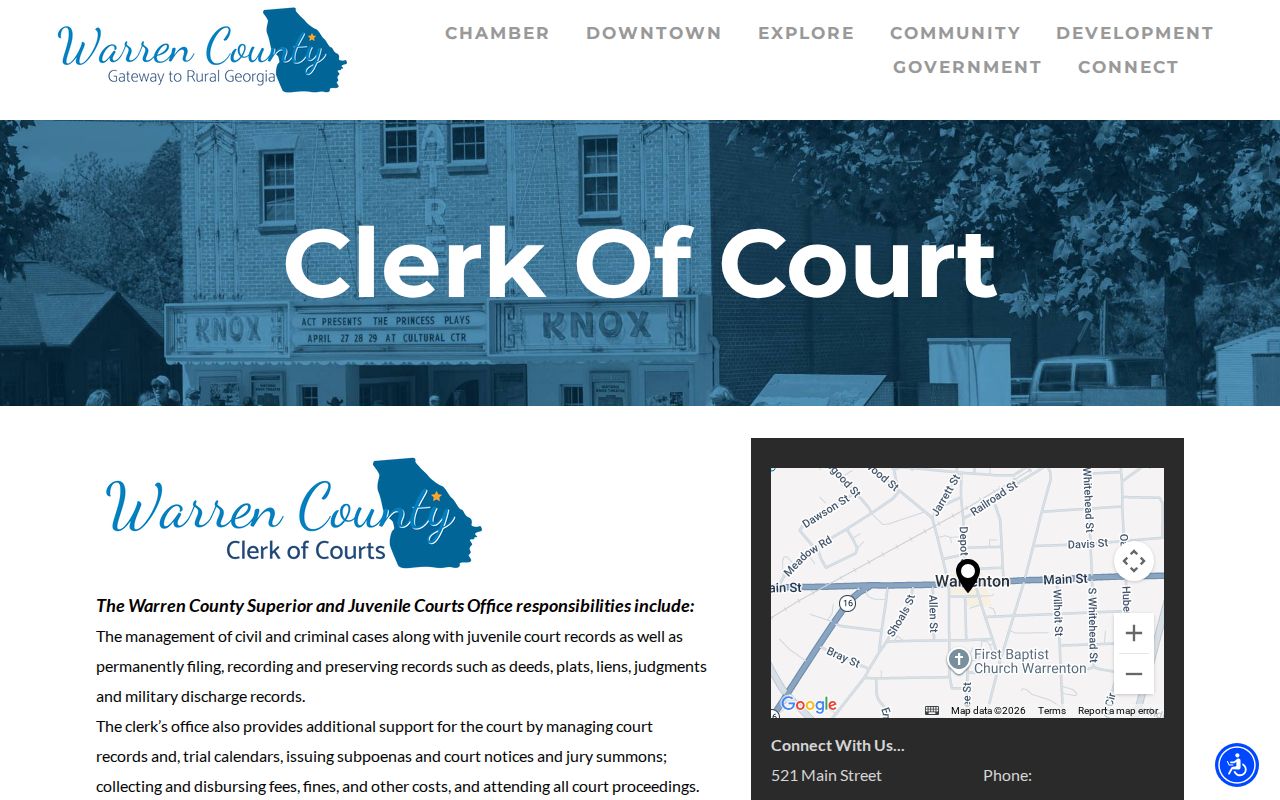
A web docket is useful for locating the file, but a clerk-certified copy is the stronger record when exact wording or authenticity matters.
Warren Superior E-Access
The Georgia Courts E-Access directory lists Warren Superior and sends users to a provider that requires an account. Account access does not mean the docket is private. It means the state directory is only the front door to the provider. Search by case number when possible. A party-name search with a filing range is the next best route, but common names require care.
The judiciary also publishes a forms and records directory, pictured below. That directory helps separate statewide forms from the actual Warren County docket. The Warren entry and the local clerk remain the sources for this county’s filed criminal case.
Provider controls may change, so read the live labels and do not assume an empty name result proves that no case exists.
How to Search Case Records
Use a narrow, court-by-court search. Warren County has no unified municipal and county criminal docket. The clerk can confirm archived material, document availability, and certified-copy options, while the lower court must be checked for preliminary records that never became a Superior case.
- Open Georgia Courts E-Access and select Warren Superior.
- Create or sign into the provider account, then search the exact case number if known.
- Otherwise use the party name and a useful filing-date range, checking identity details carefully.
- Open the docket and read each charge-level event, disposition, judgment, and sentence.
- Call the Warren clerk for missing documents, older files, certification, and a current cost estimate.
| Field | Type | Required | Use |
|---|---|---|---|
| Court or county | Selection | Yes | Choose Warren Superior |
| Case number | Text | No | Best unique key; retain punctuation |
| Party name | Text | No | Verify common-name matches |
| Filing range | Dates | No | Narrows broad results |
| Status or category | Filter | No | Options depend on provider |
| Sign in | Account | Yes | Required after the state redirect |
Note: Warren County has not published local search, copy, or certification fees, so request an estimate before ordering.
Warren Magistrate Starts the Record
Many Warren County criminal records begin downstairs from the felony docket. The Probate and Magistrate office in Suite 104 creates or keeps records for warrant applications, first appearances, bonds, preliminary hearings, extradition, traffic, and county ordinance matters. A first appearance addresses custody and process. It is not a trial or conviction.
The county’s Probate and Magistrate Court page is the source for those duties. Its captured view appears below. This lower-court layer explains why a Warren Superior name search can miss a recent warrant or preliminary hearing even when a public record exists elsewhere.
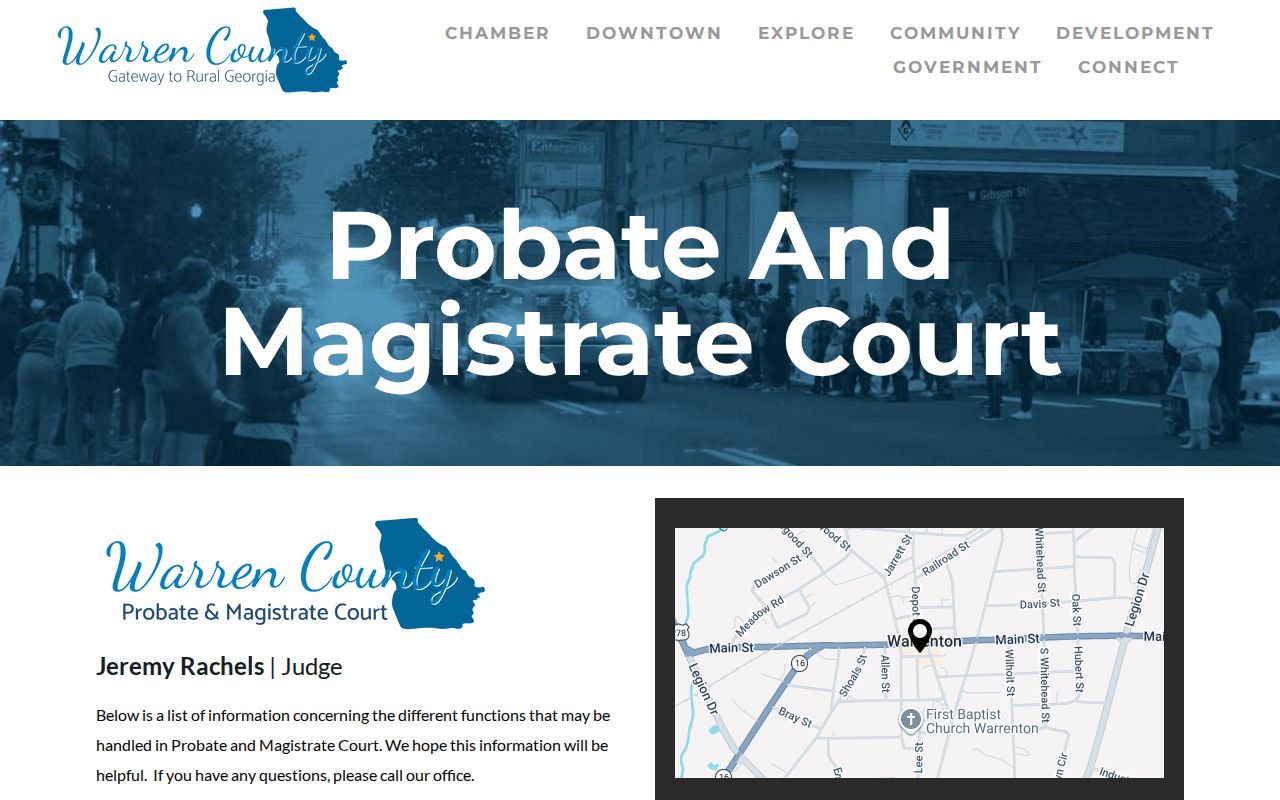
Use the case or warrant number to connect the lower-court record with any later Superior Court prosecution.
What the Case File Shows
A Warren County court file documents litigation, not just custody. It can show what the prosecutor filed, which lawyers appeared, what motions and hearings occurred, and how each charge ended. The result may differ from the initial arrest allegation.
| Case number and court | The file’s unique reference and owning tribunal. |
|---|---|
| Charging document | An indictment or authorized accusation stating filed charges. |
| Docket entries | A dated list of filings, notices, hearings, orders, and events. |
| Hearing dates | Scheduled or completed proceedings and their type. |
| Disposition and judgment | The result for each charge, such as dismissal, plea, verdict, or nolle prosequi. |
| Sentence and conditions | Confinement, probation, financial terms, and other court-ordered conditions. |
Protected victim and minor data, Social Security numbers, sealed material, and some sensitive filings are not ordinary public content. Document access can also differ from docket-index access.
Read Warren Outcomes Charge by Charge
One case may contain several charges with different results. “Disposition” means the outcome of a charge or case. A nolle prosequi is the prosecutor’s formal decision not to proceed at that time. A dismissal ends a charge without conviction, while a no bill means the grand jury declined to return the proposed indictment. Dead-docket status is not the same as acquittal.
- Arraignment
- The hearing where filed charges are addressed and a plea is taken.
- True bill
- A grand jury returned an indictment authorizing prosecution.
- No bill
- A grand jury declined the proposed indictment.
- Sentence
- The punishment and conditions imposed after conviction.
The clerk’s filed judgment controls over shorthand on a booking sheet. If a disposition is missing from a GCIC history, obtain the final Warren court document and ask the responsible source agency to transmit the correction.
Stages of a Criminal Case
A Warren County case may start with a warrant or warrantless arrest, followed by booking and a prompt first appearance. The prosecutor then reviews the evidence. A felony may proceed by indictment or an authorized accusation, followed by arraignment, motions, discovery, plea talks, or trial. Judgment and sentence follow a guilty plea or verdict, and an appeal may create a separate appellate record.
Case flow: Charges Filed › Arraignment › Pretrial › Plea or Trial › Disposition › Sentencing
The Warren Superior Court page, shown in the next image, identifies the local felony-court layer. The image anchors the process in the court that holds the filed record rather than the separate booking office.
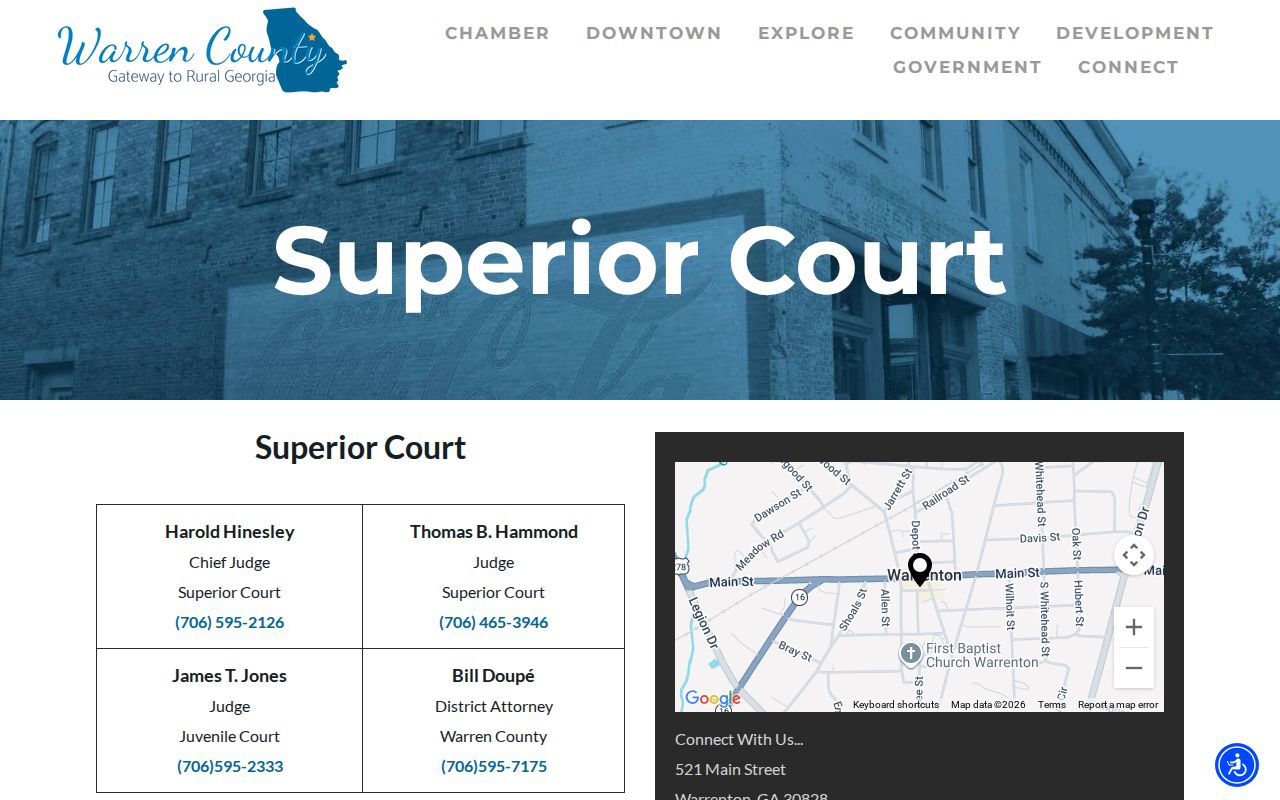
No fixed Warren County timeline was published. Scheduling depends on the case, court calendar, filings, and orders.
Toombs Circuit Prosecutes Warren Felonies
Warren County is one part of the Toombs Judicial Circuit, which also covers Glascock, Lincoln, McDuffie, Taliaferro, and Wilkes counties. The District Attorney prosecutes Superior Court criminal matters, but the Warren clerk keeps the public court file. Those roles should not be confused. Prosecutor work may lead to an indictment, accusation, plea, or dismissal; the filed docket and orders show what became part of the case.
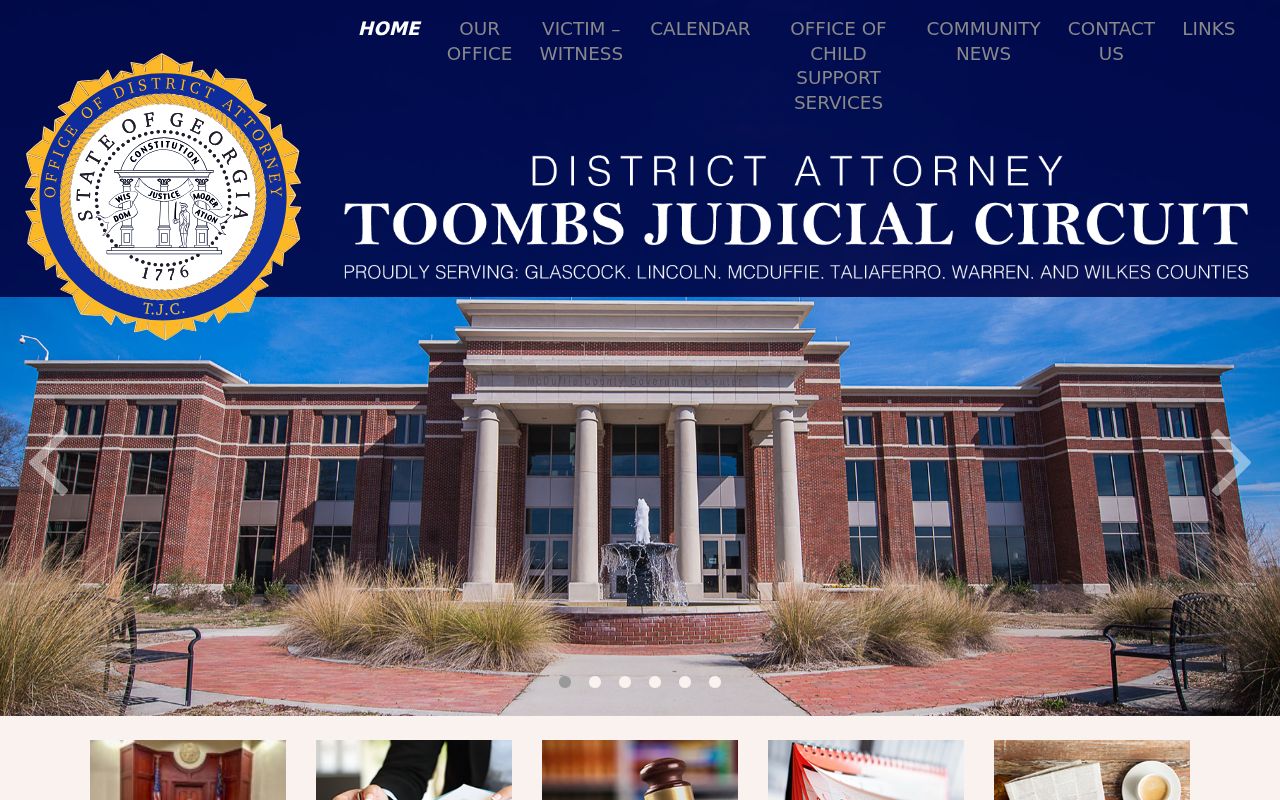
The Toombs Judicial Circuit District Attorney site supplies circuit context and is captured below. Its Warren satellite is at the courthouse, while the main office is in Thomson. The image helps show why a county case can involve a circuit-level prosecutor but still have a Warren County file.
Questions about filed copies go to the clerk. Legal representation and prosecution decisions belong to different offices.
When a Warren Case Is Missing
First verify the spelling, court, case type, and date range. Then ask whether the matter is still in Magistrate Court, belongs to a municipal court, was filed under another case number, predates online coverage, or is restricted. An online absence is not a no-record certificate.
Call the clerk with the subject’s name, approximate filing year, and any case, warrant, or citation number. Ask for an identifiable docket or file rather than an agency-created summary. If the question began with an arrest, compare the final case outcome with the original custody entry in Warren County arrest history records. The two records can differ for valid reasons.
Access & Restrictions
Georgia law presumes access to many government records, but it does not make every page of every criminal file public. Juvenile records, sealed or restricted matters, protected victim and minor identifiers, Social Security numbers, financial-account data, and some pending-investigation material can be withheld or redacted. The online docket may show less than the courthouse file.
The clerk should answer questions about a Warren County court record, copies, and certification. The Sheriff or arresting agency controls incident and booking material. Magistrate Court controls its warrant and preliminary records. That custodian-first rule avoids asking one office to create a record owned by another. Public access also does not turn an allegation into proof of guilt.
A written request should describe an existing, identifiable record. Give the court, case number, party name, approximate year, and desired document, such as the indictment, judgment, sentence, or full docket sheet. Ask whether inspection is available and whether redaction, retrieval, copying, or certification will affect cost. Warren County has published courthouse hours but no local criminal-copy schedule, so the clerk’s current estimate controls. If only part of a filing is protected, ask whether a redacted public portion can be released.
Note: Verify identity and every charge-level result before relying on a Warren County criminal case record.